
India is well-stocked with inventories of crude oil and key petroleum products, including petrol, diesel, and aviation turbine fuel (ATF), to deal with short-term disruptions as the war intensifies in West Asia, Union Minister of Petroleum and Natural Gas Hardeep Singh Puri said on Tuesday.

Indian benchmark indices, Sensex and Nifty, staged a moderate rebound after a significant correction in the previous session, driven by foreign fund inflows and a largely positive trend in global markets, though geopolitical tensions between the US and Iran continued to foster caution.

Top leaders from the US, Iran, and Pakistan, along with other nations, have gathered in Switzerland for high-level talks aimed at restoring peace in West Asia. These negotiations follow a recently signed Memorandum of Understanding between the US and Iran, initiating a 60-day window for a deal. Discussions focus on Iran's nuclear programme and the fragile interim peace deal, amidst renewed tensions and the fluctuating status of the Strait of Hormuz.

The Reserve Bank of India (RBI) and the central government have introduced a package of measures, including tax exemptions for FPIs on government securities and a concessional foreign-exchange swap facility, aiming to attract up to $50 billion in foreign capital. This initiative is designed to strengthen India's balance of payments and potentially cover the projected BoP gap for FY27.

Chinese foreign ministry spokesperson Mao Ning said that the country believes that dialogue and negotiation are the only viable solutions to resolving disputes and that the continued escalation of the conflict serves no one's interests.

Iran hosted a large send-off rally for its World Cup team in Tehran, despite ongoing concerns about visa issues for entry into the United States, where the team is scheduled to play its group matches.

Indian stock markets experienced a second consecutive day of losses, with the Sensex tumbling 852 points, as crude oil prices surpassed USD 100 per barrel due to stalled US-Iran negotiations and escalating geopolitical tensions in West Asia.

The Indian government addressed opposition concerns regarding the West Asia crisis in an all-party meeting, outlining its strategy for ensuring the security of the Indian diaspora, fulfilling energy needs, and maintaining diplomatic relations with key partners. The government also dismissed Pakistan's reported mediation efforts.

India's fresh investment plans in Q1FY27 surged 71 per cent to 14.77 trillion, primarily driven by four large nuclear power projects worth 6.5 trillion, according to investment monitoring firm Projects Today. Excluding these nuclear projects, fresh investment plans actually declined 4.27 per cent quarter-on-quarter.

Italy has denied the United States the use of the Sigonella military base for flights heading to West Asia, citing a lack of consultation and concerns over the nature of the flights. This decision reflects Italy's stance on avoiding escalation in the region, as Prime Minister Giorgia Meloni's government emphasises its desire to stay out of war.

Dabur India's stock has fallen over 17 per cent since the start of the Iran war, driven by concerns over a weak monsoon, the West Asian crisis, and rising input costs, which are expected to impact the company's revenues and margins, particularly affecting its significant rural sales and international markets.

'The West Asia or the Gulf crisis has shown that what we develop as national infrastructure when things are not as bad as they could be, we forget to plan for adversities.'

Union Minister Pralhad Joshi assures that the Indian government is prepared to bring back Indians stranded in the Gulf region due to the Iran-Israel conflict and disruptions in Dubai, emphasizing citizen safety as the top priority.

The United States on Saturday (local time) launched a third round of strikes against Iran after alleging that Iran's Islamic Revolutionary Guard Corps (IRGC) attacked the Cyprus-flagged container vessel M/V GFS Galaxy in the Strait of Hormuz.

In a post on Truth Social, Trump used unusually harsh language to convey his message, reminding Tehran of his deadline to 'make a deal' or 'open the Strait'.

The Reserve Bank of India (RBI) has debunked reports of gold sales, stating that its physical stock of gold remains unchanged at 880.52 tonnes, countering claims of selling approximately USD 12 billion to protect foreign-currency reserves.

Despite Iran allowing 'non-hostile vessels' through the Strait of Hormuz, marine insurance premiums are expected to remain elevated due to persistent high-risk classifications and ongoing geopolitical tensions, with experts cautioning that the threat of attacks and collateral damage still exists.

Delhi should keep all its options open in what is essentially a transitional period in the geopolitics of energy rather than remain a gatekeeper serving Trump's 'America First', suggests Ambasssador M K Bhadrakumar.

Indian stock market benchmarks Sensex and Nifty rebounded strongly after a two-day decline, driven by falling crude oil prices and positive global cues amid hopes of de-escalation in the Middle East.

US Central Command (CENTCOM) released footage of a maritime operation where Marines boarded an Iranian-flagged vessel, the Touska, in the Gulf of Oman, leading to heightened tensions and threats of retaliation from Iran.

Amid rising tensions, Iran reportedly launched ballistic missiles toward a US-UK military base, prompting concerns about regional stability and the potential for escalating conflict in the Middle East.

External Affairs Minister S Jaishankar has affirmed India's commitment to ensuring issues like a free, open, and rule-based maritime order, seafarer safety, and countering terror financing receive due attention at the UN Security Council during its 2028-29 term.

Indian hotel companies are experiencing a sharp correction in share prices due to the Iran war and broader geopolitical tensions, leading analysts to cut operating profit expectations and valuations, despite structurally positive medium-term prospects.

Pakistan has intensified its efforts to bring the US and Iran back to the negotiating table to end the war in West Asia, following President Trump's extension of the ceasefire. Pakistani officials have engaged with Iranian, Turkish, and British counterparts to promote dialogue and diplomacy for a peaceful resolution.

Dozens of US planes carrying ammunition landed in Tel Aviv, raising concerns about potential strikes on Iran. Negotiations between the US and Iran remain deadlocked over key issues, with both sides issuing fresh demands and warnings.

India's retail inflation rose to 4.38 per cent in June, driven primarily by costlier food items, pushing it above the Reserve Bank of India's median target of 4 per cent for the first time under the new series.

A US-sanctioned tanker carrying Iranian crude oil is heading to India, marking the resumption of oil imports from Iran after seven years.

Hybrid mutual fund schemes attracted significant inflows of Rs 1.55 lakh crore in FY26, a 29 per cent increase, as investors increasingly opted for diversified investment strategies to navigate volatile market conditions and geopolitical tensions.

'If movement remains stalled for three to four months, more than 300,000 recruitments from India could be affected.'

Brent crude prices surged sharply on Monday, rising by more than 25 per cent to $116.5 per barrel, amid the ongoing conflict in West Asia, which has made crude prices bullish.
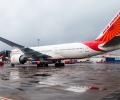
Indian carriers have cancelled over 10,000 flights since the onset of the West Asia conflict, as escalating tensions and airspace restrictions disrupted international operations, a senior government official said.

Due to airspace restrictions resulting from the conflict in the Middle East, Indian domestic carriers have cancelled 278 international flights. Some airlines are operating limited services and special flights to assist stranded passengers.

US Special Envoy Steve Witkoff and Iranian Foreign Minister Abbas Araghchi are reportedly heading to Switzerland for a new round of US-Iran negotiations, following a recently announced memorandum of understanding to end hostilities in West Asia and a ceasefire between Israel and Hezbollah.

Head of the Iranian Parliament's National Security Committee Ebrahim Azizi on Saturday said that Iran has prepared a "professional mechanism" to regulate maritime traffic in the Strait of Hormuz through a designated route, which will be unveiled soon.

The Indian rupee weakened against the US dollar due to a strengthening dollar, high crude oil prices, and foreign fund outflows amid geopolitical uncertainties.

Fintech unicorn Razorpay has confidentially filed draft documents with SEBI for an Initial Public Offering, with market sources estimating the issue size between Rs 5,000-6,000 crore. This move comes as a rival firm, PhonePe, has paused its IPO plans.
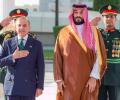
Prime Minister Shehbaz Sharif met with Saudi Crown Prince Mohammed bin Salman to express Pakistan's support for the Kingdom amidst escalating tensions in West Asia, reaffirming their mutual defence pact and commitment to regional stability.

US Vice President J D Vance is currently in Switzerland, leading critical technical talks with Iran to advance diplomatic efforts on Iran's nuclear programme and secure a lasting ceasefire in Lebanon, following a recently signed memorandum of understanding aimed at de-escalating West Asian hostilities.

Indian benchmark equity indices, Sensex and Nifty, experienced a decline in early trade, ending a three-day rally, primarily due to heavy selling in IT stocks and concerns over prolonged instability in West Asia.

Pakistan capital Islamabad is emerging as the leading venue for the next round of technical negotiations between the US and Iran, a media report said Sunday.
